The short answer
Yes, many people use storage during a move. It is common when your new place is not ready, your closing date changes, or you need time to sort and unpack.
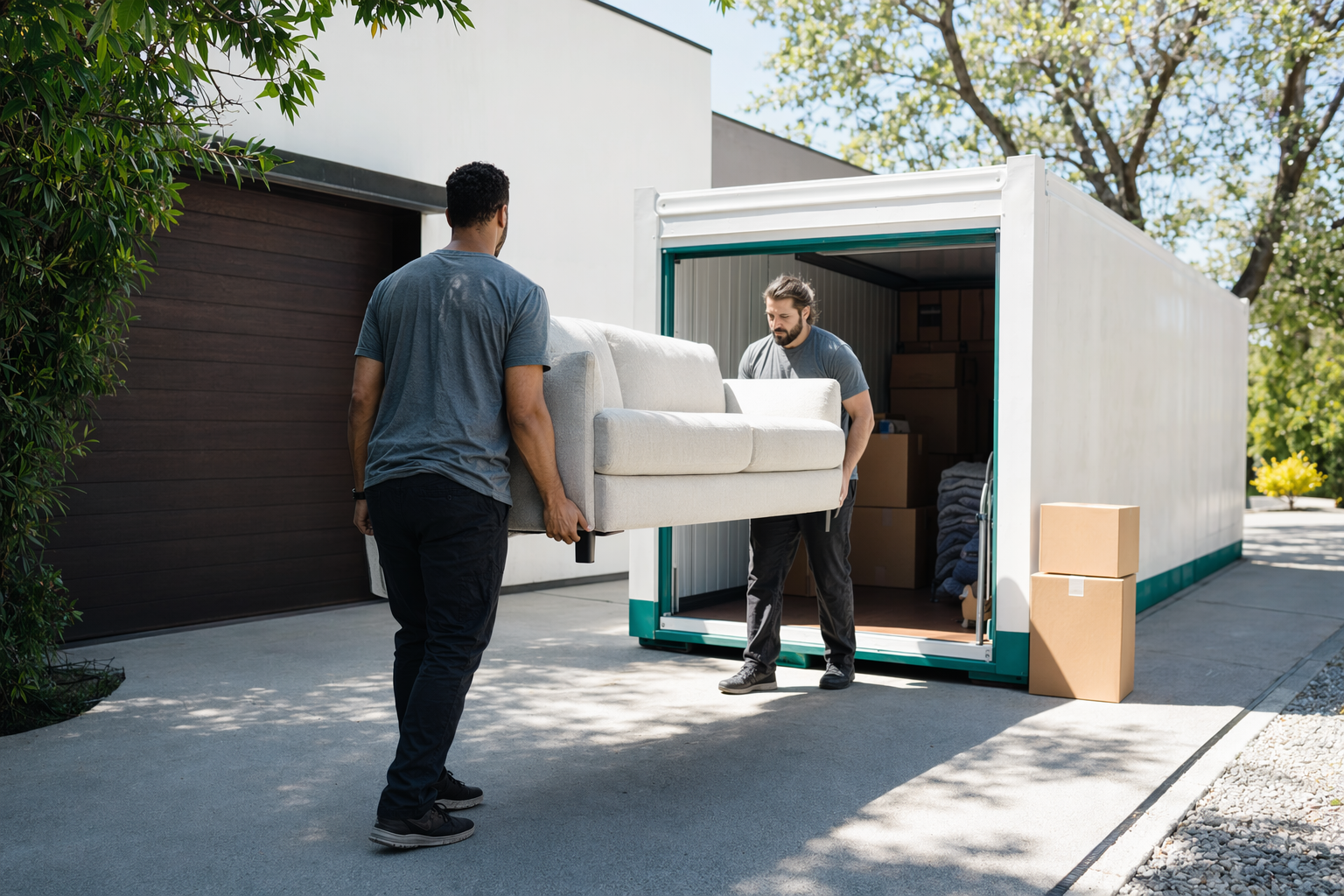
The best option depends on how often you need your stuff and how far you are moving. If you want the container dropped at your home and then moved or stored, portable storage may fit. Learn more about portable storage pods. If you want to drive to a unit yourself, self-storage may work better.
StowMatch is a free matching service. We help you compare local storage options. We do not store goods or set prices.
- Good for gaps of a few days to several months
- Useful for local moves and long-distance moves
- Best choice depends on access, distance, and budget
Details
There are three common ways to store items during a move. First, portable storage. A container comes to your home, you load it, and the provider picks it up for storage or delivery. This can cut down on extra truck loading.
Second, self-storage. You rent a unit at a storage property and bring your items there yourself. This gives you direct access during office or gate hours. Third, moving-storage service. In some cases, your things are loaded, moved, and stored as part of one plan.
Think about size before you book. A 5x5 unit fits a few boxes and small furniture. A 5x10 or 10x10 often works for a studio or one-bedroom home. A 10x15 or 10x20 may fit a two- to three-bedroom move, depending on how much furniture you have. These are rough guides, not exact rules.
Also ask about timing. Some people need storage for 3 to 7 days. Others need 1 to 3 months while waiting on a lease, job start, or home closing. If you are not sure where to begin, compare options here.
- Portable storage can be easier when you want fewer loading steps
- Self-storage can be better if you need regular access
- Choose a little extra space if you expect to add boxes later
Common mistakes
A common mistake is choosing only by the lowest monthly rate. Total cost may also include delivery fees, pickup fees, admin fees, lock fees, and insurance or coverage costs. Ask for the full list before you decide.
Another mistake is renting too little space. Crammed units can make access hard and raise the risk of damage. On the other hand, paying for much more space than you need can waste money each month.
People also forget about access rules. Some storage options let you visit often. Others need advance notice or have limited access. If you may need clothes, work tools, or documents, check access hours first.
Last, do not pack in a rush. Label boxes by room. Keep a small first-open box with medicine, chargers, papers, and a few days of clothes. That can save a lot of stress.
- Ask about all fees, not just the monthly charge
- Check access hours and notice rules
- Label boxes clearly and keep essentials with you
What it costs
Costs vary by city, season, unit size, and service type. Typical ranges, not quotes, for self-storage are often about $40 to $90 per month for a small 5x5, about $70 to $160 for a 5x10 or 10x10, and about $120 to $300 or more for larger units in busy markets.
Portable storage usually has more than one charge. You may see separate fees for container drop-off, monthly storage, and redelivery. Typical monthly storage can range from about $100 to $250 or more, with transport fees added on top. Long-distance moves can cost more.
If climate control matters, expect a higher rate in many markets. This can be worth it for wood furniture, electronics, photos, and important papers. Prices also tend to rise in summer and at the end of the month when moving demand is high.
- Rates change by location and season
- Portable storage often has transport fees plus storage fees
- Climate-controlled space usually costs more
Next step
Start with your timeline, your home size, and how often you need access. If you know those three things, it gets much easier to narrow down the right option.
StowMatch is a free way to compare storage matches near you. Tell us what you are moving, where, and when. We can help you review options for portable storage, self-storage, and other moving-related storage services. Start here at StowMatch guides or get matched.
- Know your dates
- Estimate your space size
- Decide how often you need access
Common questions
How long can I keep items in storage during a move?
It depends on the provider and plan. Many people store for a few days, a few weeks, or several months.
Is portable storage better than self-storage?
Not always. Portable storage can be easier for loading at home. Self-storage can be better if you want regular drive-up access.
Do I need climate-controlled storage?
It can help protect wood furniture, electronics, photos, and papers from heat and humidity. It usually costs more.
Can StowMatch give me an exact price?
No. StowMatch is a free matching service. We help you compare options, but providers set their own availability and pricing.