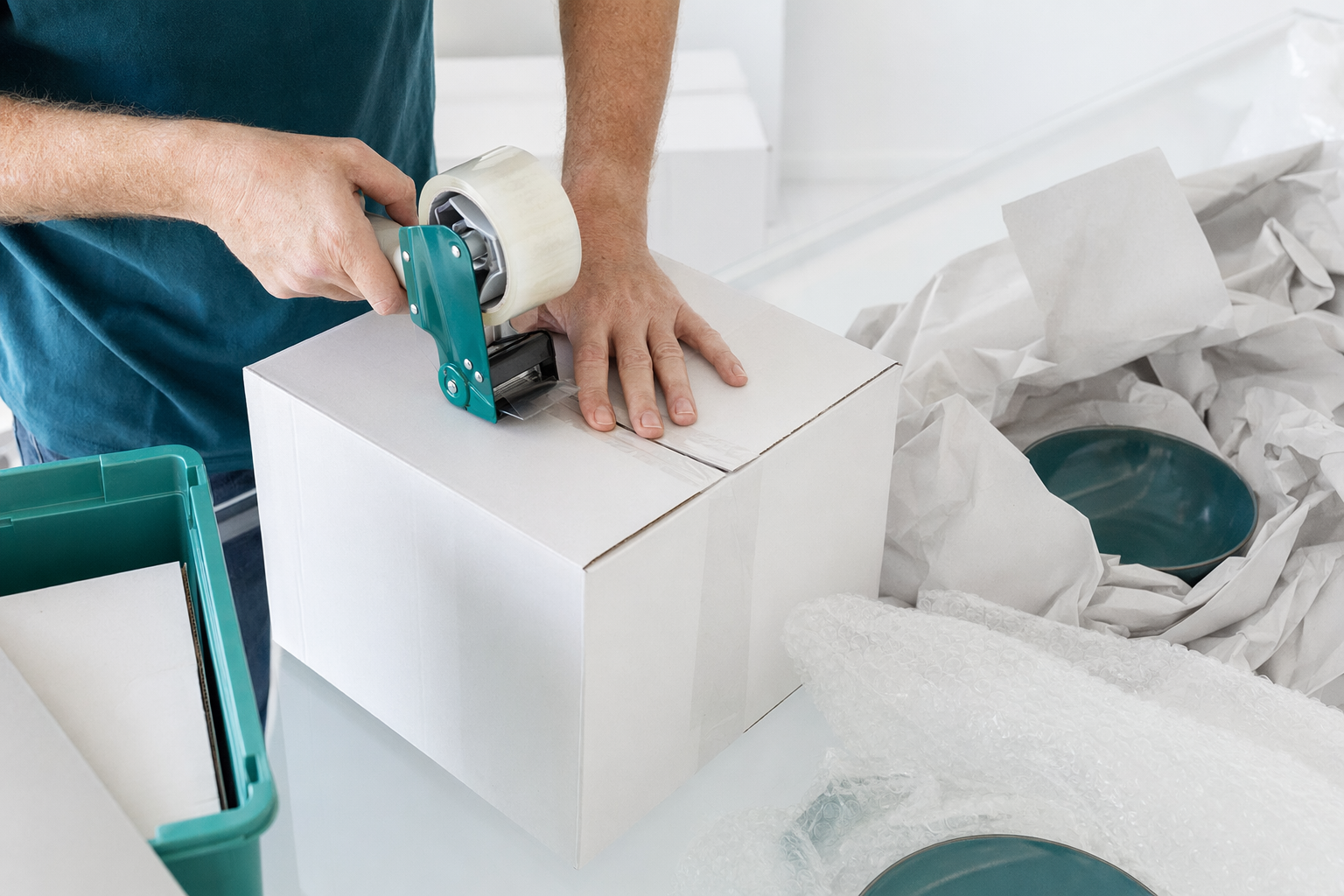
The short answer
Put your biggest, heaviest items in first. Start at the back of the unit. Build a solid base with furniture, appliances, and heavy boxes. Then stack medium boxes, then light boxes, and keep breakables on top.
Use the space all the way up, but do not make tall, wobbly piles. Stand couches and mattresses on end if the item allows it. Leave a path about 2 to 3 feet wide so you can get to the back without unloading everything.
Keep things you may need soon near the door. Label each box on more than one side. If you are using portable storage pods, the same loading order helps reduce shifting during the move.
- Heavy items first, in back
- Medium and light boxes next
- Fragile items on top
- Leave a 2 to 3 foot walkway
- Put often-used items near the door
Details
Take apart beds, tables, and other large furniture when you can. Put hardware like screws and bolts in a small bag, label it, and tape it to the item. Cover wood and fabric with moving blankets or sheets to help prevent scratches and dust.
Pack boxes tight so they do not collapse. Use small boxes for books and tools. Use medium or large boxes for lighter things like clothes, pillows, and kitchen items. A good rule is to keep most boxes under 40 to 50 pounds so they are safer to lift.
Make rows. Keep similar-size boxes together so stacks stay level. Fill empty gaps with soft items like towels or cushions. Do not put fragile things under heavy items, and do not let glass or mirrors touch bare concrete or metal.
If you are storing for more than a month, think about air flow and access. Leave a little space between the wall and your items if possible. Put moisture-sensitive items in sealed bins, and avoid packing anything damp.
- Use small boxes for heavy items
- Keep most boxes under 40 to 50 pounds
- Label boxes on 2 sides
- Protect furniture with blankets
- Store damp items only after they are fully dry
Common mistakes
One common mistake is packing by room instead of by weight and strength. That can leave heavy things on top of weak boxes. Another mistake is filling the front with random items, then blocking access to everything behind them.
People also waste space by leaving drawers full, not taking furniture apart, or using too many different box sizes. Mixed sizes can make stacks lean. Leaning stacks can fall and break things.
Another mistake is forgetting what is inside. Make a simple list on your phone or a piece of paper. Number your boxes and write down what is in each one. That can save a lot of time later.
- Do not stack heavy boxes on weak ones
- Do not block the back of the unit
- Avoid too many box sizes
- Do not store wet or dirty items
- Make a box list so you can find things fast
What it costs
Packing a storage unit can cost very little if you already have boxes, tape, and blankets. If you need supplies, typical ranges, not quotes, might be about $2 to $5 per box, $4 to $10 for packing tape, and $10 to $25 for a furniture cover or moving blanket.
If you hire help, labor often costs extra and varies by city, season, stairs, and how much you have. If you choose a larger unit so you can leave a walkway and stack safely, the monthly price may be higher than a tighter fit. The right size can still save money if it prevents damage and makes access easier.
StowMatch does not store your items or set prices. We help you compare options near you, including local unit choices and moving-storage options, so you can make a simpler decision.
- Supplies can add up even for a small move
- Labor costs vary by location and job size
- A slightly larger unit may improve access and safety
- Prices vary, so compare nearby options
Next step
Before you book, make a quick list of what you plan to store. Count large pieces like beds, sofas, dressers, and appliances. Estimate how many boxes you have. That will help you choose a better size and decide whether a standard unit or a moving-storage option fits your move.
If you want help comparing nearby storage, start with get matched. StowMatch is free to use. We help you compare storage options near you, with plain-language guidance along the way.
- Count furniture and estimate box totals
- Think about what you will need to reach later
- Compare unit and moving-storage options
- Use StowMatch to compare nearby choices for free
Common questions
What should go in first in a storage unit?
Large, heavy items should go in first, starting at the back. Build a stable base, then stack lighter boxes above.
Should I leave space to walk inside the unit?
Yes. A walkway about 2 to 3 feet wide makes it much easier to reach items later.
Can I stack boxes to the ceiling?
You can use vertical space, but keep stacks stable. Put heavy boxes low and fragile items high, and avoid tall, leaning piles.
Does StowMatch store my things or set the prices?
No. StowMatch is a free matching service that helps you compare storage options near you.