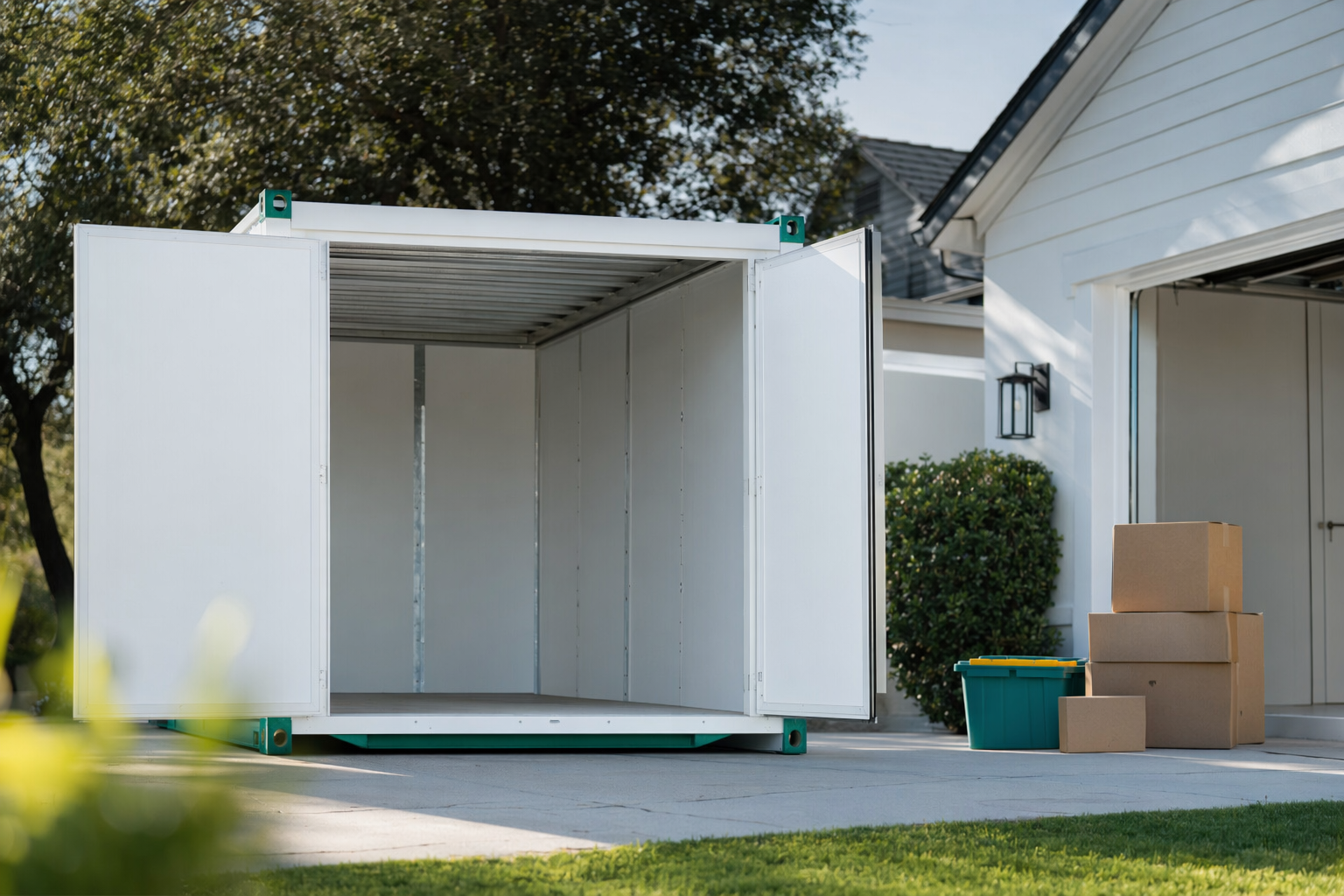
Short answer
Load heavy items first, keep a clear path to the door, and fill gaps with soft items and packing materials. Aim for a tight, stable stack so nothing shifts during moves.
If you are not sure how much fits, start with the smallest pod size that can hold your largest items plus a little extra space. You can also use our free guide to estimate needs: How much storage do I need?.
- Heavy items on the bottom.
- Stack to the edges. Leave only a door-clear lane.
- Fill empty spaces to prevent shifting.
Details
Step 1. Plan your layout. Put your heaviest boxes and items on the floor first, near the door so they do not block access later. Keep walkways clear so you can reach what you need.
Step 2. Use a stable base. If you have drawers, dressers, or shelves, remove any loose parts or lock them in place. Use furniture pads or blankets between items to prevent scratches.
Step 3. Stack smarter. Create rows like a grid. Place flatter items, like bins, books, and boxed kitchen goods, on the bottom. Then add medium items next, like lamps and folded bedding. Finish with lighter items on top.
Step 4. Secure and protect. Wrap fragile items and pack them in sturdy boxes. Use crumpled paper or foam for small gaps, not just to “fill air.” If your pod has ties or straps, use them when available to reduce shifting.
Step 5. Label for quick access. Put the items you will need first near the top or toward the door lane. Use clear labels like “Kitchen, Week 1” or “Tools.” This helps you avoid unloading everything later.
- Wrap fragile items separately.
- Keep labels facing outward when possible.
- Avoid tall, wobbly piles.
Cost note
Storage pod pricing often depends on pod size, dates, and local availability. Typical ranges can vary a lot by city and move length. The best way to compare is to get matched to options near you, then review the details for each listing: Get matched.
- Expect costs to vary by location.
- Longer time in storage often costs more.
Next step
Before you load, make a quick inventory and measure your biggest items. Then pick a pod size you can fill efficiently without forcing awkward shapes.
If you want more help choosing what to store first and how to avoid surprises, start here: answers. When you are ready, use the free matching tool to compare storage options near you: Get matched.
- Measure before delivery.
- Plan your “door lane” for easy access.
Common questions
What should I load first in a storage pod?
Load heavy items and sturdy boxes first, then add medium items, and place lighter items on top last.
Should I stack boxes on top of furniture?
If the furniture is stable, you can. Use blankets or pads between surfaces and avoid stacking too high on unsteady pieces.
How do I stop items from shifting?
Fill empty spaces, wrap fragile items, and place heavier items on the bottom. Use straps or ties if your pod setup includes them.
How can I make my storage easier to unpack?
Label boxes clearly and keep items you need soon near the door lane or toward the top.